
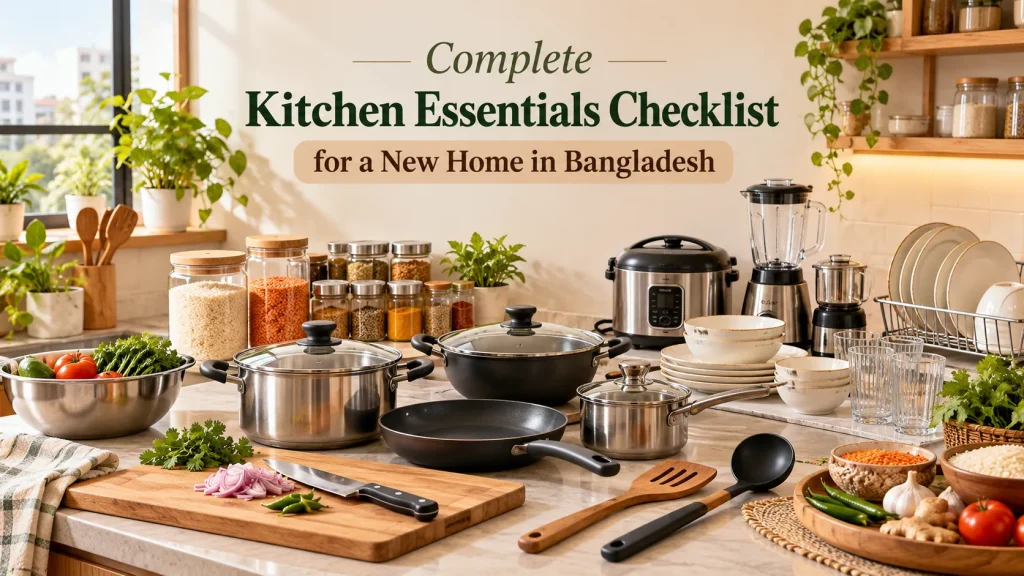
Moving into a new home feels exciting until you enter the kitchen and realize you have a stove, a packet of rice, and absolutely nothing to stir it with.
Whether you’re moving into your first apartment, starting married life, or setting up a family home, a practical kitchen essentials checklist for a new home in Bangladesh can save you from unnecessary purchases and last-minute shopping trips.
You don’t need every kitchen gadget on the market. Start with the tools you use most often, then add appliances as your cooking routine develops.
This guide covers essential cookware, kitchen utensils, appliances, food storage, cleaning supplies, and safety items. You’ll also find a simple checklist to help you set up your kitchen without stretching your budget.
Quick Kitchen Essentials Checklist for a New Home
Want the short version before you go shopping? Start here.
| Category | Essential Items | Priority |
|---|---|---|
| Cooking | Stove, frying pan, cooking pot, saucepan | Must-have |
| Food Preparation | Kitchen knife, cutting board, mixing bowl, peeler | Must-have |
| Cooking Utensils | Spatula, cooking spoon, ladle, tongs | Must-have |
| Dining | Plates, bowls, glasses, spoons | Must-have |
| Food Storage | Food containers, spice jars, water jug | Must-have |
| Cleaning | Dishwashing liquid, scrubber, dishcloth, waste bin | Must-have |
| Food Safety | Refrigerator or reliable access to safe food storage | Important for perishables |
| Small Appliances | Blender, grinder, electric cooker | Based on cooking needs |
| Optional Appliances | Juicer, yogurt maker, coffee grinder | Buy when needed |
| Organization | Dish rack, drawer organizer, shelf baskets | Based on available space |
Your ideal shopping list depends on how many people live in your home, how often you cook, and the meals you prepare.
A bachelor living alone may need fewer utensils than a family that cooks breakfast, lunch, and dinner every day.
The goal isn’t to fill every cabinet. It’s to make your kitchen functional.
1. Essential Cookware for Everyday Bangladeshi Cooking
Start with cookware because almost every homemade meal requires a reliable cooking surface.
Bangladeshi kitchens commonly prepare rice, dal, vegetables, fish, meat, and various bhortas. A few carefully chosen pots and pans can handle many of these dishes.
Cooking Pots and Saucepans
A medium cooking pot can handle rice, dal, soups, and several types of curry.
A small saucepan works well for heating liquids, preparing sauces, and cooking smaller portions.
Larger households may benefit from an additional cooking pot, but there’s no need to buy five similar-sized pots on your first shopping trip.
Frying Pan or Kadai
A frying pan works for eggs, pancakes, and shallow frying.
A kadai provides deeper sides for stir-frying vegetables, preparing curry bases, or cooking dishes that require frequent stirring.
Choose a size that fits your household and cooking style.
Pressure Cooker
A pressure cooker can help prepare certain foods, such as lentils and tougher cuts of meat, using pressure and heat.
However, it isn’t mandatory for every household.
If you buy one, check its capacity, manufacturer instructions, pressure-release system, and compatibility with your stove.
Never fill it beyond the manufacturer’s specified limit or attempt to open it while pressurized.
Basic Cookware Checklist
- Medium cooking pot
- Small saucepan
- Frying pan
- Kadai or deep cooking pan
- Suitable lids
- Pressure cooker, if needed
Buying tip: Choose cookware that works with your cooking setup. For example, an induction stove requires compatible cookware. Don’t assume every metal pot will work with it.
2. Must-Have Kitchen Utensils for Daily Cooking
Cooking utensils may look inexpensive individually, but buying unnecessary sets can quickly clutter a new kitchen.
Start with tools that perform different tasks.
Kitchen Knife and Cutting Board
A dependable kitchen knife handles everyday food preparation, including cutting vegetables, fruits, and suitable ingredients.
Pair it with a stable cutting board.
Use separate cutting boards for raw meat and ready-to-eat foods when possible. Otherwise, wash and sanitize the board thoroughly between tasks.
The US FoodSafety.gov food-safety guidance recommends keeping raw meat, poultry, seafood, and their juices separate from ready-to-eat foods.
Spatula, Cooking Spoon, and Ladle
A spatula helps turn or lift food.
A cooking spoon works for stirring rice, dal, and curry. A ladle makes serving soups and liquid dishes easier.
These three utensils cover many daily cooking tasks.
Vegetable Peeler and Grater
A peeler helps prepare potatoes, carrots, and other vegetables.
A grater can handle ingredients such as ginger or vegetables when a recipe calls for finely grated pieces.
Neither needs to be expensive. Comfortable handling and easy cleaning matter more.
Mixing Bowls and Colander
Mixing bowls help with marinating, preparing ingredients, and combining foods.
A colander helps drain water from washed vegetables, pasta, or other suitable foods.
A few nesting bowls can save valuable cabinet space.
Essential Utensils Checklist
- Kitchen knife
- Cutting board
- Spatula
- Cooking spoon
- Ladle
- Kitchen tongs
- Vegetable peeler
- Grater
- Mixing bowls
- Colander
Practical advice: A comfortable knife that you maintain properly is more useful than a large knife set that you rarely touch.
3. Essential Kitchen Appliances for a New Home in Bangladesh
Kitchen appliances can make selected tasks more convenient, but your cooking habits should guide your purchases.
A family that prepares fresh spice pastes every day may appreciate a grinder. Someone who mostly cooks simple meals might prefer an electric multi cooker.
Let’s look at the most useful options.
Blender: For Drinks and Food Preparation
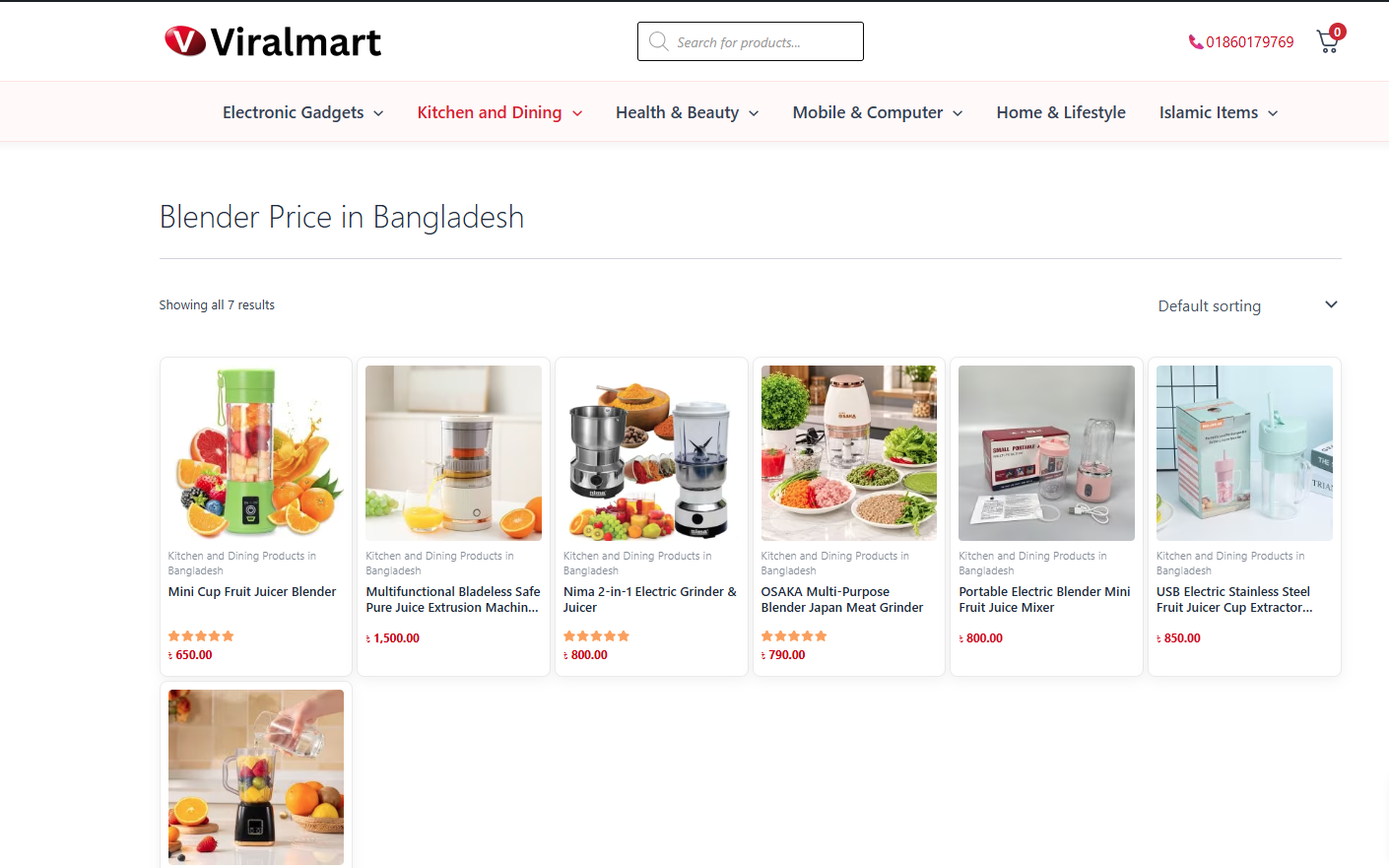
A blender can help prepare smoothies, milkshakes, purees, and other compatible blended foods.
It may also handle certain sauces or soft ingredients, depending on the model.
Before buying a blender, check:
- Jar capacity
- Motor specifications
- Supported ingredients
- Blade design
- Cleaning instructions
- Electrical compatibility
A compact blender may suit a small household. However, don’t assume a portable blender can crush hard ice or grind dry spices unless its manufacturer confirms those functions.
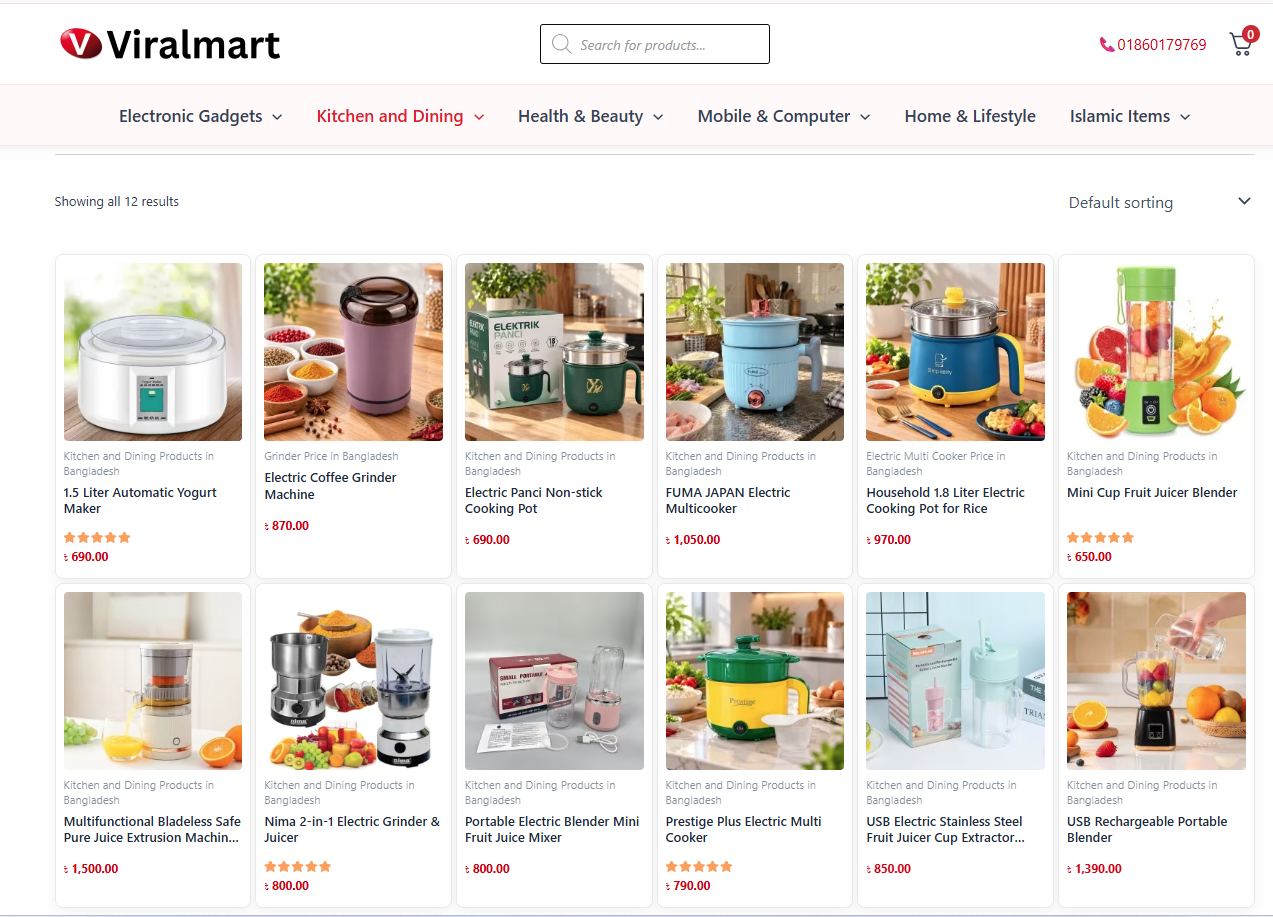
You can explore blenders at ViralMart BD and compare the available models.
Grinder: For Spices and Other Supported Ingredients
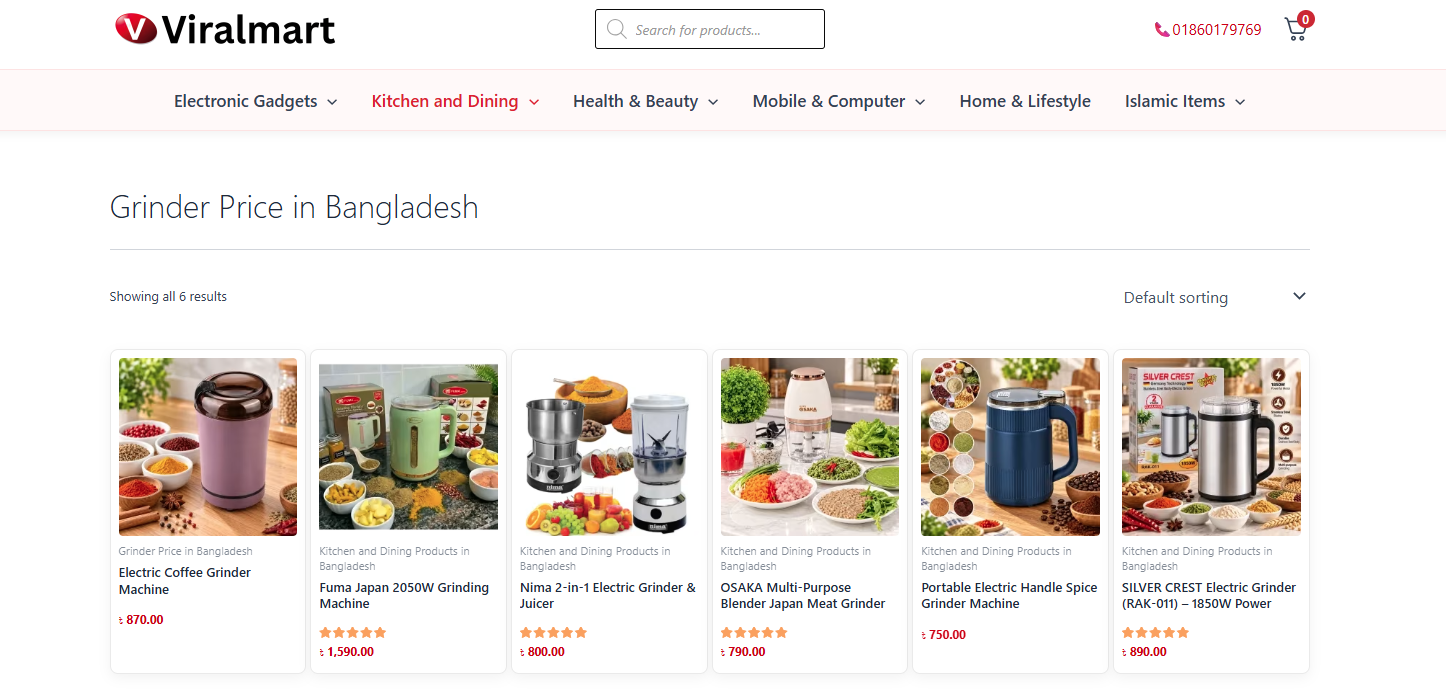
Freshly prepared spice mixtures often feature in Bangladeshi cooking.
An electric grinder can help process suitable ingredients such as cumin, coriander, or coffee beans, depending on its intended use.
Some grinders support dry ingredients only. Others may handle wet ingredients or include separate attachments.
Always check the product specifications.
A blender and grinder aren’t automatically interchangeable. One machine may make a good smoothie while struggling with hard dry ingredients.
Explore the Grinder collection at ViralMart BD if grinding is part of your regular cooking routine.
Electric Multi Cooker: A Flexible Cooking Option
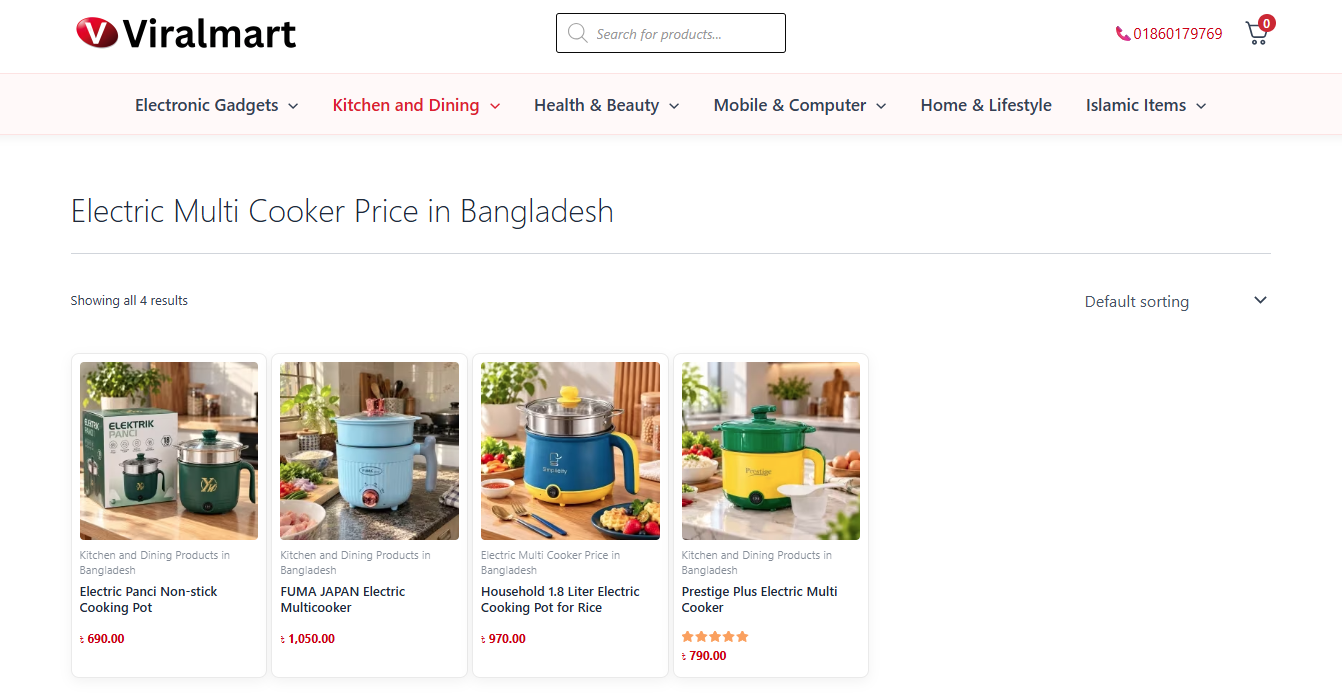
An electric multi cooker can support different cooking tasks depending on the exact appliance.
Some compact models handle suitable one-pot dishes, while other multi cookers offer different heating modes and functions.
Before choosing one, check its capacity, rated power, cooking modes, and instructions.
For a household with limited kitchen space, a suitable multi cooker may be convenient. However, don’t assume it replaces a pressure cooker, frying pan, rice cooker, or full-size stove in every situation.
Explore Kitchen Appliances at ViralMart BD to compare currently listed electric cookers and cooking pots.
Juicer: Useful, but Not Essential for Everyone
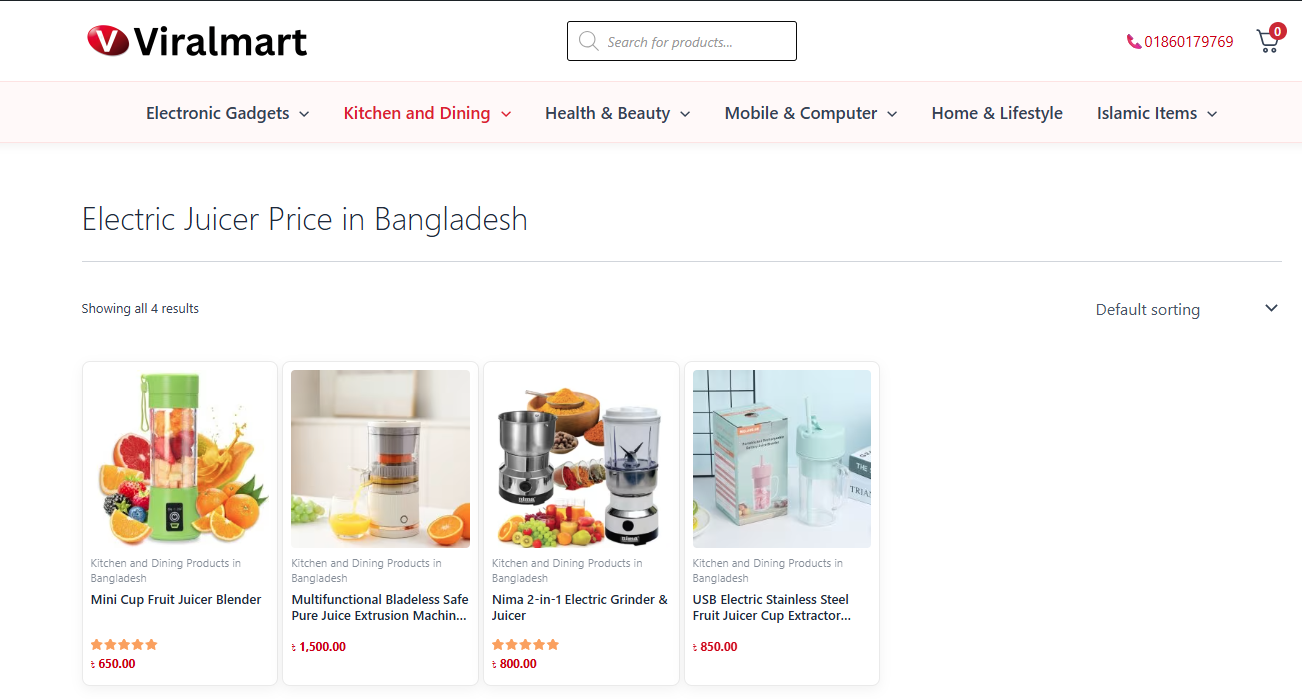
If you regularly prepare fresh fruit juice, a juicer may suit your routine.
However, a juicer and blender work differently.
A blender processes ingredients into a mixture that generally retains the blended pulp. A juice extractor separates juice from some solid material, depending on its mechanism.
Before purchasing, check whether the appliance is a true juice extractor or a blender marketed as a juice maker.
If you only prepare fruit drinks occasionally, you may not need both appliances.
Refrigerator: Important for Perishable Food
A refrigerator is an important consideration when setting up a home kitchen, especially if you store milk, fish, meat, cooked meals, or other perishable foods.
According to FoodSafety.gov, a refrigerator should maintain 4°C (40°F) or below, while a freezer should maintain -18°C (0°F) or below.
An appliance thermometer helps you confirm the actual temperature.
If your new home doesn’t have a refrigerator, plan meals and food purchases around safe storage access. Avoid keeping perishable ingredients at room temperature for extended periods.
Appliance Priority Table
| Appliance | Main Purpose | When to Buy |
|---|---|---|
| Stove or suitable primary cooker | Everyday meal preparation | Before regular cooking begins |
| Refrigerator | Safe storage of perishable foods | Early, if storing perishables |
| Blender | Blended drinks and food preparation | If used regularly |
| Grinder | Suitable spice or ingredient grinding | If used regularly |
| Electric multi cooker | Supported electric cooking tasks | Based on space and cooking needs |
| Juicer | Juice extraction | Optional |
| Yogurt maker | Controlled yogurt preparation | Optional |
| Coffee grinder | Grinding coffee beans | Optional |
Remember: A useful appliance solves a task you actually perform. An unused appliance simply becomes an expensive cabinet decoration.
4. Dinnerware and Serving Essentials
Once you can cook, you need something to serve the food in.
Fortunately, this section is straightforward.
Plates, Bowls, and Glasses
Choose enough dinner plates, bowls, and drinking glasses for the people who live in your home.
Add a few extra pieces if you regularly host guests.
You don’t need a twelve-person dinner set for a household of two unless entertaining is already part of your routine.
Eating and Serving Utensils
Keep everyday spoons and suitable serving utensils within easy reach.
Your dining needs may also include forks, depending on the meals your family enjoys.
Basic Dining Checklist
- Dinner plates
- Small bowls
- Drinking glasses
- Eating spoons
- Forks, if used
- Serving spoons
- Water jug or dispenser
- Serving tray, if needed
Choose materials that suit daily use and cleaning.
5. Food Storage Essentials for an Organized Kitchen
Food storage deserves attention in a new kitchen, especially in Bangladesh’s warm and often humid conditions.
Poor storage can make ingredients difficult to manage and may increase the risk of spoilage or contamination.
Dry Food Containers
Keep rice, dal, flour, sugar, and other dry ingredients in clean containers suited to the food.
Check container lids, materials, and capacity before buying.
Store dry goods according to their package instructions, away from moisture and household chemicals.
Spice Containers
Separate spice jars can help you identify ingredients while cooking.
Label containers with names such as turmeric, cumin, coriander, and chili powder.
Add purchase or opening dates if that helps you rotate older ingredients first.
Refrigerator Storage Containers
Use appropriate food-storage containers for leftovers and refrigerated ingredients.
Keep raw meat and seafood separate from ready-to-eat foods.
USDA guidance recommends placing leftovers in shallow containers for faster cooling and refrigerating them promptly.
Important Food Storage Rules
According to FoodSafety.gov:
- Refrigerate perishable foods within two hours.
- If the surrounding temperature exceeds 32°C (90°F), refrigerate perishables within one hour.
- Keep the refrigerator at 4°C or below.
- Keep the freezer at -18°C or below.
These recommendations matter in Bangladesh, where kitchen temperatures can rise significantly during hot weather.
Food Storage Checklist
- Rice and dal containers
- Flour and sugar containers
- Spice jars
- Suitable leftover containers
- Food-safe water container
- Refrigerator thermometer
- Labels or marker
You don’t need a perfectly matching set of jars. You need clean, suitable containers that protect your food.
6. Kitchen Cleaning Supplies You Should Buy Immediately
Don’t leave cleaning supplies until the end of your shopping list.
A functional kitchen needs a simple, consistent cleaning routine.
Dishwashing Essentials
Keep dishwashing liquid or another suitable dish detergent, a scrubber, and clean cloths available.
Choose cleaning materials that suit your cookware and surfaces.
For example, abrasive scrubbers may damage some nonstick coatings.
Countertop and Sink Cleaning
Clean kitchen countertops and food-contact surfaces according to the surface manufacturer’s instructions.
Pay particular attention after handling raw meat, poultry, fish, or other potentially contaminating ingredients.
The CDC’s food-safety guidance recommends cleaning hands, utensils, and surfaces, separating raw foods, cooking foods safely, and refrigerating perishables promptly.
Waste Management
Choose a kitchen waste bin that fits your available space.
Empty it regularly, particularly when it contains food scraps.
Store cleaning chemicals away from food and food preparation equipment.
Cleaning Supplies Checklist
- Dishwashing liquid
- Scrubber or sponge
- Clean dishcloths
- Suitable surface cleaner
- Kitchen waste bin
- Waste bags
- Dish drying rack
- Handwashing soap
Small habit, big difference: Clean as you cook when practical. It usually feels easier than confronting a mountain of dishes after dinner.
7. Basic Kitchen Safety Essentials
A new kitchen should be convenient, but safety comes first.
Fire and Heat Safety
Keep towels, packaging, and other flammable materials away from cooking surfaces.
Stay near the stove while frying, grilling, or boiling food.
The National Fire Protection Association identifies unattended cooking as a major cause of cooking fires and recommends staying in the kitchen during activities such as frying.
Keep a suitable fire extinguisher accessible if possible, and learn how to use it. For a fire that grows or feels unsafe, leave the area and contact your local emergency services.
Never pour water onto a cooking-oil fire.
Electrical Safety
Check the voltage and power requirements of electric appliances before connecting them.
Use suitable outlets and avoid overloading power strips or extension boards.
Keep electrical cords away from hot cookware and wet areas.
Stop using equipment that develops damaged wiring, unusual heat, or other signs of electrical failure.
Knife and Blade Safety
Store knives securely and keep them out of children’s reach.
Use a stable cutting board and avoid leaving sharp blades hidden in a sink full of water.
Always unplug a blender or grinder before handling its blades for cleaning, following the manufacturer’s instructions.
Safety Checklist
- Suitable fire extinguisher, where practical
- Heat-resistant oven mitts or pot holders
- Basic first-aid kit
- Secure knife storage
- Safe electrical outlets
- Appliance manuals
- Clear, accessible cooking area
8. How to Set Up a Kitchen on a Budget in Bangladesh
You don’t need to purchase everything on moving day.
A better approach divides shopping into three stages.
Stage 1: Buy the Absolute Essentials
Start with the items you need to prepare and eat basic meals.
These include:
- A suitable stove or primary cooker
- One or two cooking pots
- A frying pan
- A knife and cutting board
- Essential cooking spoons
- Plates, bowls, and glasses
- Basic cleaning supplies
- Safe food-storage arrangements
This stage creates a functional kitchen.
Stage 2: Add Frequently Used Appliances
After using your kitchen for a short period, you’ll understand which tasks take the most time or effort.
If you prepare fresh spice mixtures often, consider a grinder.
If smoothies are part of your routine, a blender may make sense.
If you want another suitable cooking method, compare compact electric cooking appliances.
Stage 3: Buy Convenience and Specialty Items
Consider a juicer, yogurt maker, additional storage organizers, or specialty utensils only when you have a clear use for them.
This approach helps you avoid buying several products with overlapping functions.
Sample Shopping Priorities
| First Purchase | Next Purchase | Optional Later Purchase |
|---|---|---|
| Stove and cookware | Blender or grinder | Yogurt maker |
| Basic utensils | Electric multi cooker | Dedicated juicer |
| Plates and bowls | Additional storage containers | Specialty serving accessories |
| Cleaning supplies | Extra cookware | Coffee grinder |
| Safe food storage | Kitchen organizers | Decorative kitchen items |
These are shopping priorities, not fixed price categories. Actual costs depend on the products and brands you select.
9. Kitchen Essentials for Different Household Sizes
Not every home needs the same equipment.
For Someone Living Alone
Focus on compact cookware, a practical cooking setup, a basic knife, a cutting board, and a small set of dinnerware.
Choose appliances based on how often you prepare meals at home.
For a Couple
A medium cooking pot, frying pan, saucepan, and basic utensil set can provide a useful starting point.
You may also appreciate a blender or grinder if you cook regularly.
For a Family
Larger households may need greater cookware capacity, more plates and bowls, additional food containers, and more refrigerator space.
Choose sizes based on your actual meal portions rather than guessing.
10. Common Mistakes to Avoid When Buying Kitchen Essentials
Buying Too Many Appliances at Once
An appliance isn’t essential just because a product advertisement says it is.
Start with the cooking tasks you perform most often.
Ignoring Kitchen Space
Measure your countertops, cabinets, and shelves before purchasing bulky equipment.
Remember to allow appropriate clearance around appliances where the manufacturer requires ventilation.
Choosing Products Only by Price
The cheapest option may not suit your needs, while the most expensive option may offer features you’ll never use.
Compare materials, capacity, electrical specifications, cleaning requirements, and product support.
Overlooking Electrical Compatibility
Check that electric appliances work with your household’s supply and suitable outlets.
An incompatible or poorly connected appliance creates unnecessary risk.
Forgetting Food Storage
Cookware helps prepare food, but suitable storage helps protect ingredients and leftovers.
Plan for both.
11. Where to Buy Kitchen Essentials Online in Bangladesh
You can purchase kitchen essentials from local household shops, appliance retailers, supermarkets, or online stores.
Before ordering, compare product specifications, price, size, and suitability for your kitchen.
For compact electric appliances, explore the Kitchen Appliances collection at ViralMart BD.
The collection features products such as electric multi cookers, cooking pots, blenders, grinders, juice-making appliances, and a yogurt maker.
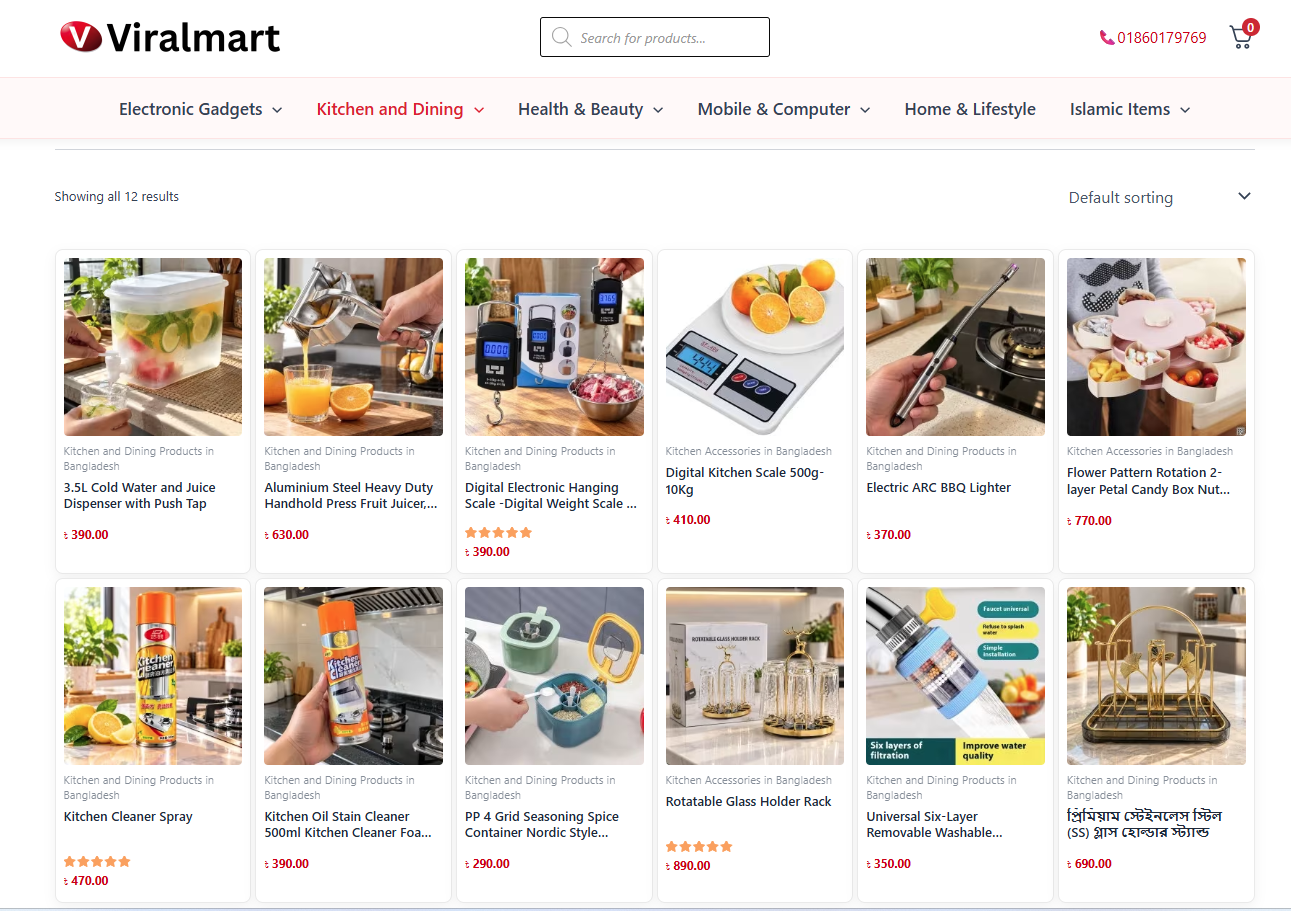
You can also explore the broader Kitchen & Dining category for related kitchen products.
Check each listing for current price, availability, specifications, delivery information, and applicable return conditions before purchasing.
Frequently Asked Questions
What are the most important kitchen essentials for a new home?
Start with a suitable stove, cooking pots, a frying pan, a kitchen knife, cutting board, cooking utensils, plates, bowls, glasses, cleaning supplies, and safe food storage. Add appliances according to your regular cooking needs.
Which kitchen appliances are essential for a new home in Bangladesh?
A suitable primary cooking appliance and safe refrigeration for perishable food are important. Blenders, grinders, and electric multi cookers can be useful depending on your household’s cooking routine.
How much does it cost to set up a kitchen in Bangladesh?
The cost depends on household size, appliance choices, cookware materials, and the items you already own. Make a shopping list and compare current retailer prices rather than relying on an unverified fixed budget.
Do I need both a blender and a grinder?
Not always. Some appliances combine functions, but their capabilities vary. If you frequently grind dry spices and prepare blended drinks, compare the supported functions before deciding whether you need separate devices.
Is an electric multi cooker useful for a small apartment?
It can be useful if the appliance supports the meals you want to cook and suits your available space and electrical setup. Check its capacity, operating instructions, and actual cooking functions.
What cookware should I buy first?
A medium cooking pot, small saucepan, and frying pan or kadai provide a practical starting point for many everyday meals.
How can I organize a small kitchen?
Use suitable food containers, keep frequently used tools accessible, store less-used items separately, and avoid filling countertops with unnecessary appliances.
How should I store cooked food safely?
Place leftovers in suitable shallow containers and refrigerate them promptly. FoodSafety.gov recommends refrigeration within two hours, or one hour when the surrounding temperature exceeds 32°C.
Can I set up a kitchen without buying every appliance?
Yes. Start with basic cookware, utensils, a suitable cooking setup, food-storage arrangements, and cleaning supplies. Purchase additional appliances only when they serve a clear purpose.
Where can I find affordable kitchen appliances in Bangladesh?
Compare current prices, product specifications, and availability across trustworthy sellers. ViralMart BD offers a selection of compact kitchen appliances, including blenders, grinders, and electric cooking products.
Final Thoughts: Build a Kitchen That Works for You
A complete kitchen doesn’t need to look like a showroom.
It needs to support your everyday meals, fit your available space, and stay manageable within your budget.
Start with reliable cookware, essential utensils, safe food storage, and cleaning supplies. Then choose appliances that match your cooking habits.
You can always add another gadget later. Your kitchen won’t complain if you skip the yogurt maker for now.
Ready to set up your new kitchen? Explore Kitchen & Dining products at ViralMart BD and compare suitable tools and appliances for your new home.
Sources and References
The following authoritative resources support the food-safety and cooking-safety recommendations in this guide:
- FoodSafety.gov — Four Steps to Food Safety: https://www.foodsafety.gov/keep-food-safe/4-steps-to-food-safety
- USDA Food Safety and Inspection Service — Leftovers and Food Safety: https://www.fsis.usda.gov/food-safety/safe-food-handling-and-preparation/food-safety-basics/leftovers-and-food-safety
- Centers for Disease Control and Prevention — Preventing Food Poisoning: https://www.cdc.gov/food-safety/prevention/
- National Fire Protection Association — Cooking Safety: https://www.nfpa.org/education-and-research/home-fire-safety/cooking
- ViralMart BD — Kitchen Appliances Collection: https://viralmartbd.com/product-category/kitchen-dining/kitchen-appliances/
Editorial note: This article provides practical kitchen setup guidance. Appliance functions and availability vary by model, while food-safety instructions should follow current official guidance and relevant manufacturer documentation.